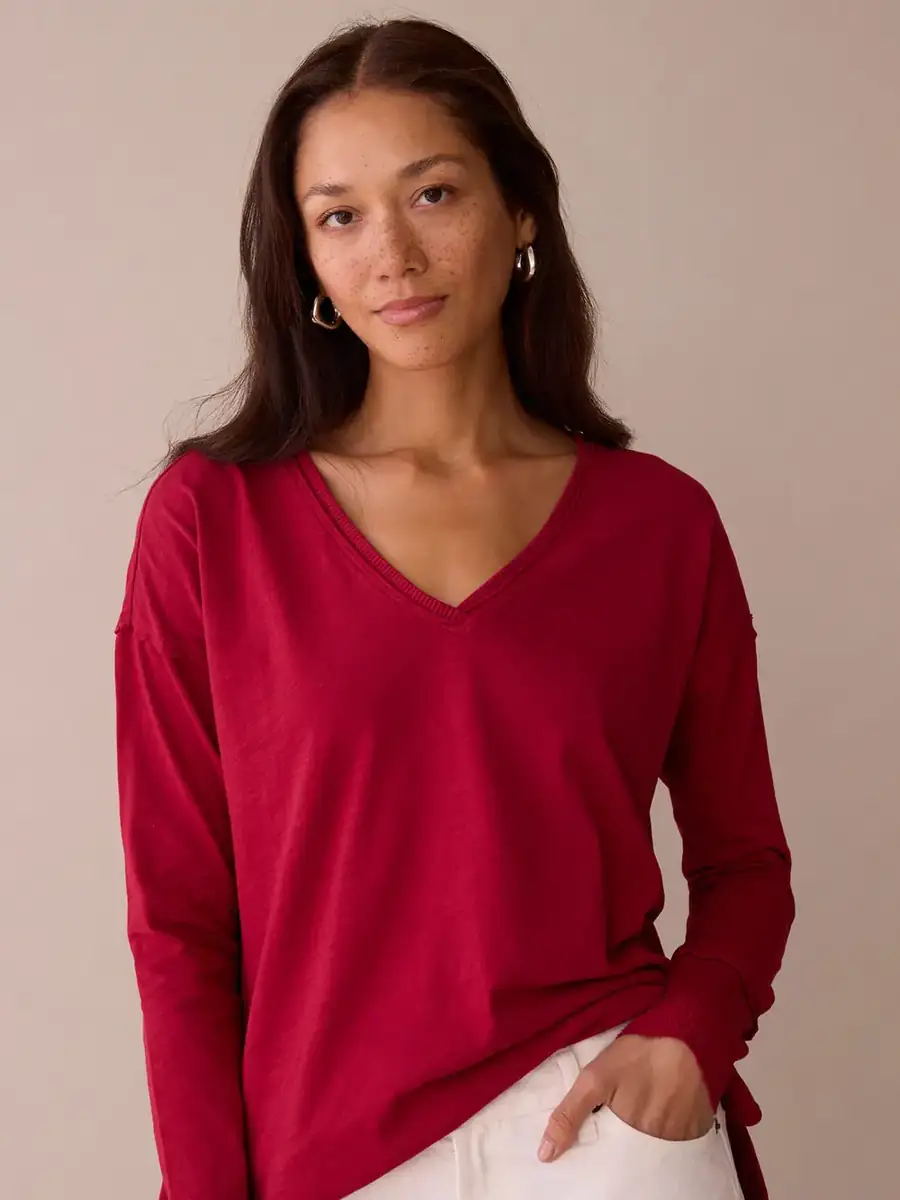
Why we dye with traceable natural minerals
Conventional dyeing is one of the most water-hungry steps in making clothes. Here is what changes when the color comes from minerals instead of petroleum.
Most color in the fashion industry starts as petroleum. The dye bath runs hot, the rinse water carries heavy metals, and the whole process is difficult to trace once it leaves the mill. We wanted a different answer for the pieces we make most often.
Lower temperatures, less water
Traceable mineral dyes fix at lower temperatures than conventional reactive dyes, which cuts the energy needed to heat the bath. They are also free of the toxic heavy metals that make conventional dye house wastewater so hard to treat.
The trade-off you can see
Natural dyeing is not perfectly uniform, and we do not pretend otherwise. Color can shift slightly from batch to batch, and a well-loved piece will soften and fade over years of washing. We treat that as a feature: it is the difference between a garment with a history and a garment with a barcode.
Variation is not a defect. It is evidence that a person, not a printer, made the color.
How to keep the color you bought
- Wash cold, inside out, with a gentle detergent and no bleach.
- Skip the dryer — heat is what sets uneven fading in place.
- Dry in the shade if you can; direct summer sun will lighten saturated colors.
- Expect the first wash to release a little loose dye. Wash alone the first time.
Every dye lot we use is documented, so if you ever want to know what is in the fabric you are wearing, ask us. We keep the records.